Proudly serving Tucson, Oro Valley, Marana, Sahuarita, Green Valley, Vail & surrounding areasCall or Text 24/7: 520-699-3263

Concrete Installation and Maintenance Services in Green Valley, AZ

Tucson Superior Concrete provides concrete driveway installation, patio installation, and stamped concrete for homeowners and property managers in Green Valley, Arizona. Our crews also pour sidewalks and walkways, slabs, foundations and footings, and pool decks. We repair, resurface, seal, maintain, demolish, and remove concrete when existing flatwork needs attention or replacement. Each residential or light commercial project is scoped around the property's use, access, soil, and drainage conditions.

Caliche-heavy alkaline soil, triple-digit heat, and sudden monsoon runoff can undermine concrete that is not prepared for Green Valley conditions. We evaluate grading and drainage, compact the base, match reinforcement to the site, and protect fresh concrete during curing. As a family-owned, licensed, and insured Tucson-metro contractor, our work follows American Concrete Institute mixing and curing guidance. Contact our team for a free estimate based on an on-site measurement and evaluation.

Green Valley has roughly 22,600 residents and many homeowners who plan around long-term performance rather than short-term resale. We serve Green Valley proper, communities around Canoa Ranch, Sahuarita, Continental, Elephant Head, Amado, and supported properties along the I-19 corridor and across Pima County.

★ ★ ★ ★ ★4.9/5 Average Rating - 20+ Years of Experience - Green Valley Concrete Contractor Specialists - Residential & Commercial
Concrete Services
Concrete Services in Green Valley, AZ

Our residential and light commercial concrete services cover new flatwork, structural pours, decorative finishes, repair, protection, and removal. We match each recommendation to the property's load, drainage, access, and surface goals instead of applying a generic specification. The same site-specific planning guides our concrete work in Vail, AZ , where terrain and drainage also deserve a direct evaluation.

Concrete Driveway Installation

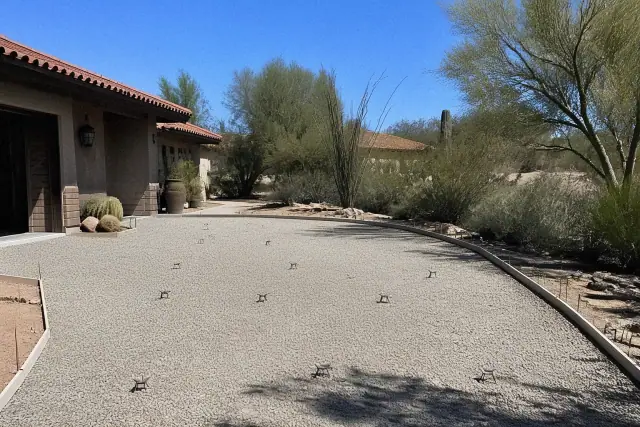
Leveled gravel driveway base with steel rebar spacers ready for concrete installation in Green Valley, AZ.

Green Valley driveways commonly range from 400 to 700 square feet. We compact a minimum 4-inch aggregate base, place a 4 to 5-inch slab with 3,000 to 4,000 PSI concrete, reinforce it with rebar or wire mesh as conditions require, and plan joints every 8 to 10 feet. Explore Service

Explore Service

Concrete Patio Installation

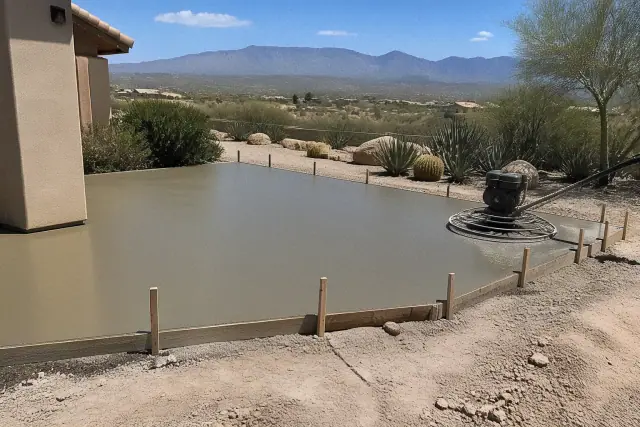
Fresh concrete being smoothed with a power trowel during a patio installation in Green Valley, AZ.

We grade patios away from foundations, reinforce the slab, and select broom, salt, or exposed-aggregate finishes to suit sun and shade. Slip resistance matters when afternoon storms arrive quickly in July and August, and control joints can align with existing hardscape patterns. Explore Service

Explore Service

Stamped Concrete

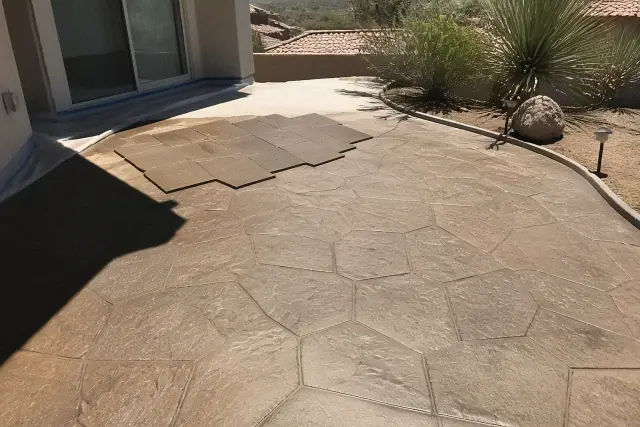
Technician stamping a stone-like pattern into fresh concrete at a residential jobsite in Green Valley, AZ.

Texture mats and color hardeners can give entries, patios, and pool surrounds the appearance of flagstone, brick, or travertine. We apply the pattern and color before curing, then seal the surface to protect its pigment while retaining the slab's structural performance. Explore Service

Explore Service

Concrete Sidewalks & Walkways

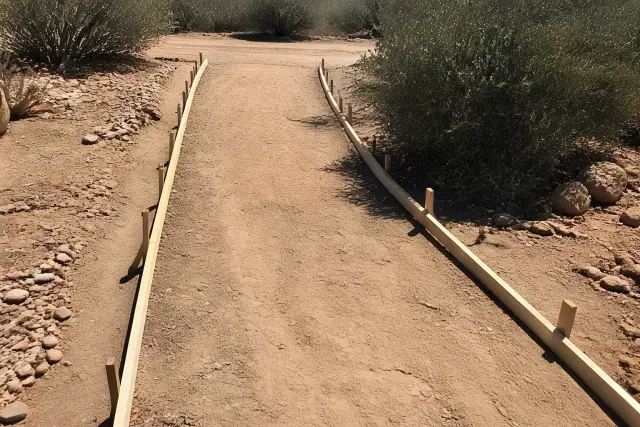
Wooden forms set for a new concrete sidewalk installation in Green Valley, AZ.

We hand-form straight or curved walkways through entries and desert landscaping, typically at 3 to 4 inches thick with a broom finish and a slight drainage pitch. Public-facing pedestrian sidewalks are typically 4 inches thick and may need to follow Pima County right-of-way standards or an HOA specification sheet.

Concrete Slab Installation

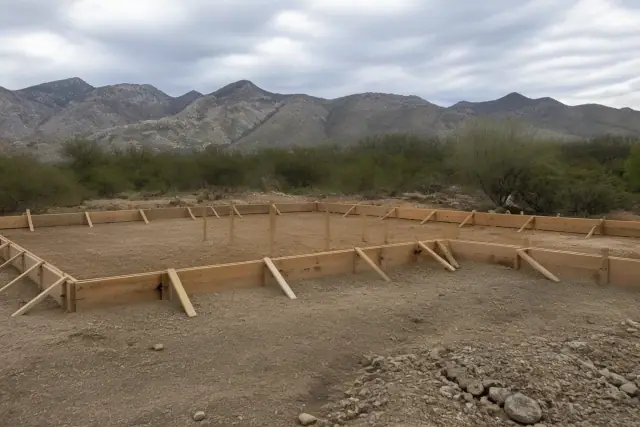
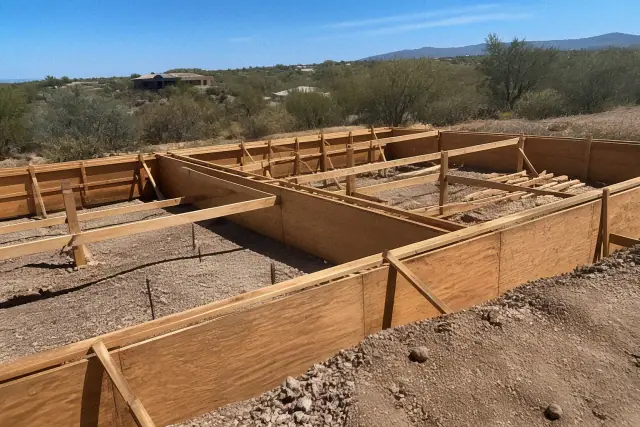
Wooden perimeter formwork for a concrete slab foundation at a construction site in Green Valley, AZ.

Shed pads, garage extensions, workshop floors, storage pads, and RV parking slabs require different thickness and reinforcement. We prepare and test the base, then match the slab design to its expected load so it is less likely to settle unevenly after use begins.

Concrete Foundations & Footings

Wooden concrete foundation formwork on a desert jobsite in Green Valley, AZ.

Additions and detached structures may require engineered plans, Pima County permit review, and staged inspections. We place foundation reinforcement to the project engineer's design and coordinate the pour around the bearing depth specified for the site's caliche-affected soil.

Concrete Repair & Resurfacing

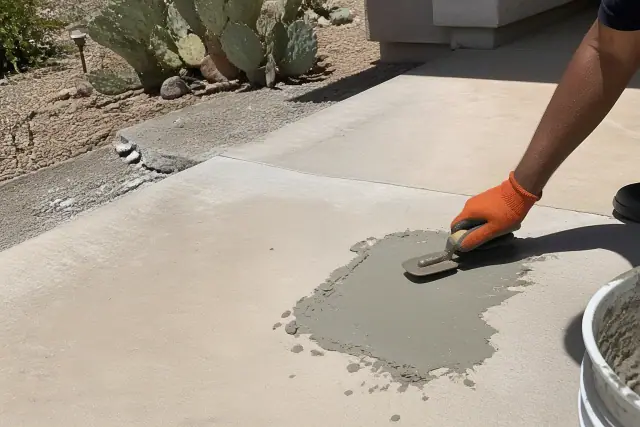
A contractor uses a trowel to apply bonding compound to repair damaged concrete flooring in Green Valley, AZ.

For cracked, sunken, spalled, worn, or pitted concrete, we assess crack routing and epoxy injection, mud-jacking, a polymer-modified overlay, or full replacement. Resurfacing uses a bonding agent to renew a sound slab without unnecessary demolition, while more severe movement may call for replacement.

Concrete Sealing & Maintenance

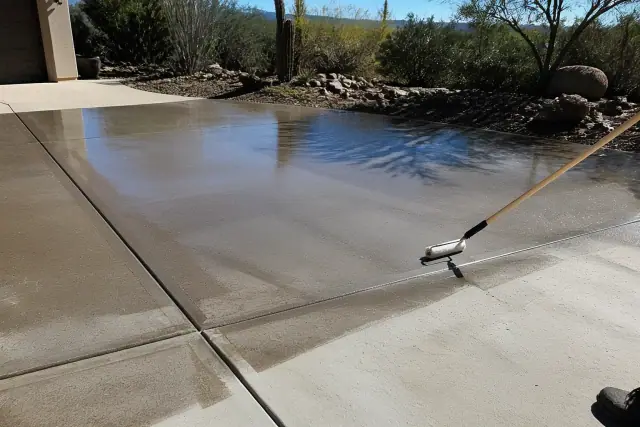
A contractor applying clear concrete sealer with a roller brush to a residential driveway in Green Valley, AZ.

A penetrating silane-siloxane sealer helps driveways resist moisture intrusion, while a film-forming acrylic can protect decorative or stamped surfaces. The right maintenance plan reduces staining and spalling caused by intense UV exposure and occasional heavy rain.

Concrete Pool Decks

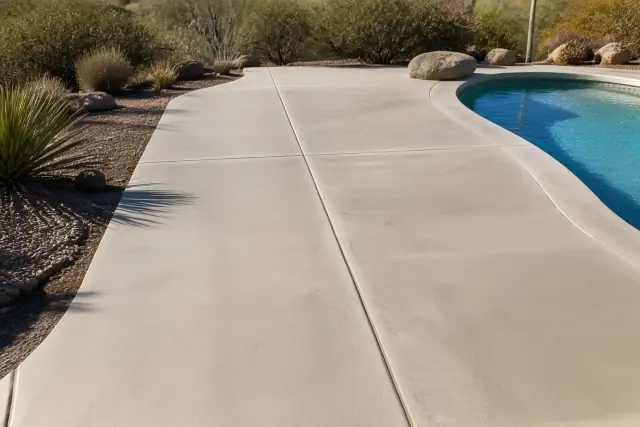
Finished concrete pool deck with expansion joints and desert landscaping in Green Valley, AZ.

Pool decks need broom or knockdown texture for wet-foot traction, careful slope away from the pool shell, and control joints aligned with the coping. Cool-touch coating options and lighter tints can also reduce surface heat buildup where afternoon sun reaches the deck.

Concrete Demolition & Removal

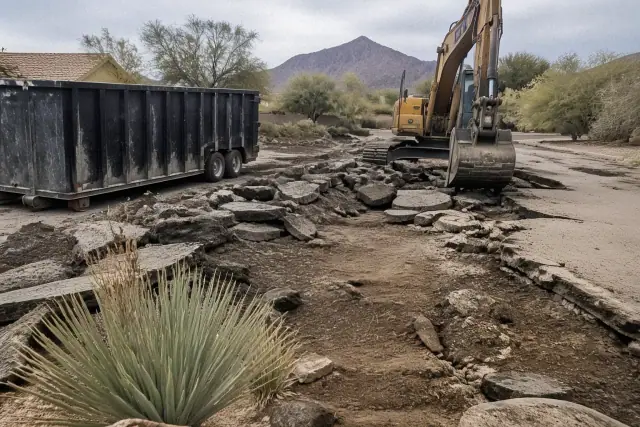
Heavy machinery breaking up and removing old pavement at a concrete demolition jobsite in Green Valley, AZ.

We break out old concrete with hydraulic hammers, load the debris for disposal, and prepare the exposed base for replacement slabs, driveway widening, or patio expansion. When access allows, immediate base preparation can avoid a second mobilization; pricing depends on slab thickness, reinforcement, and equipment access.

Choosing the Right Specification

How to Choose Concrete for Green Valley

Start with the property's intended use, then compare soil preparation, drainage, reinforcement, finish, and maintenance needs. Green Valley's caliche layer and monsoon runoff can change what a driveway, patio, walkway, or structural pour requires. A site-specific specification should make sense not only at installation but also five and ten years down the road.

Caliche-Aware Site Preparation

Caliche is a hardened calcium carbonate layer that does not compact or drain like ordinary subgrade. A sound plan identifies shallow caliche, removes unstable material, prepares the base, and tests compaction before concrete is placed.

Drainage and Grading

Look for grading that directs runoff away from foundations, pool shells, and slab edges. This is especially important near washes connected to Madera Canyon and the Santa Cruz River corridor, where sudden rain can expose weak drainage plans.

Load-Matched Slab Design

A storage pad, workshop floor, RV slab, and daily-use driveway do not carry the same loads. Thickness, base preparation, and reinforcement should reflect the vehicles, structures, or equipment the finished concrete will support.

Reinforcement and Control Joints

Rebar or wire mesh helps the slab respond to site and load conditions, while correctly planned control and expansion joints manage movement. Joint placement should account for the slab shape, nearby coping or hardscape, and moisture-driven soil changes.

Finish and Traction Options

Broom, salt, exposed-aggregate, knockdown, and stamped finishes serve different practical and decorative goals. Choose traction for walkways, patios, and pool decks first, then select color and texture that fit the property's shade and existing hardscape.

Permit and Plan Coordination

Public sidewalks, additions, detached structures, and structural footings may involve county review, engineered plans, or inspections. Confirming those requirements before breaking ground helps the work follow Pima County, engineer, and HOA specifications without resubmittal delays.

Green Valley Concrete Issues

Common Concrete Problems on Green Valley Properties

Monsoon season runs roughly from June through September, bringing abrupt runoff to soil already affected by heat and moisture cycles. Poor grading, weak base preparation, and unprotected curing can lead to ponding, edge erosion, crazing, cracking, or settlement within a few seasons. Addressing those conditions at installation is far less disruptive than needing repair or resurfacing five years later.

Request a Concrete Estimate

Shallow Caliche and Trapped Moisture

A shallow caliche layer can keep moisture beneath a slab when excavation and drainage are inadequate. As the subgrade changes through wet and dry cycles, trapped moisture can contribute to cracking and uneven support.

Heat-Driven Surface Crazing

Unshaded concrete can climb well above the air temperature in June and July. If fresh concrete loses surface moisture too quickly, it can develop fine crazing and early cracking, so curing compounds or protected wet-curing methods matter.

Monsoon Ponding and Edge Erosion

A slab that directs water toward a foundation or holds it at the edges can create ponding and wash out supporting soil. Drainage design and positive pitch help move fast storm runoff away from vulnerable concrete and structures.

Cracking, Spalling, and Settlement

Visible cracks, flaking surfaces, and sunken sections are signs that the slab, base, or surrounding conditions need evaluation. The right response may be a targeted repair, resurfacing, releveling, or replacement rather than a cosmetic patch.

Tree Root Intrusion

Roots near older driveways and walkways can lift or separate concrete as they expand beneath the slab. An inspection should distinguish root pressure from expansive-soil movement before a repair method is selected.

UV and Moisture Exposure

Intense UV exposure, staining, and intermittent heavy rain gradually wear unsealed flatwork. Choosing the appropriate penetrating or film-forming sealer helps limit moisture intrusion and preserve decorative color.

Why Choose Us

Why Choose Tucson Superior Concrete in Green Valley?

We evaluate each property in person, checking caliche, access, load, and drainage before quoting the work. Our crews bring Tucson-metro concrete experience to Green Valley's custom homes, manufactured housing communities, age-restricted developments, and light commercial properties. The result is a practical scope based on the site rather than a national franchise spreadsheet.

Green Valley Ground Knowledge

Green Valley sits near the Santa Rita Mountains at a somewhat higher elevation than central Tucson, with subdivision-by-subdivision differences in shallow caliche and native soil. We adjust base preparation, drainage, reinforcement, and curing to those site conditions.

Licensed and Insured Concrete Work

Our crews carry the licensing required by the Arizona Registrar of Contractors for concrete and masonry work, and the company is insured for its Green Valley projects. We follow American Concrete Institute guidance and coordinate Pima County requirements when permits or inspections apply.

Family-Owned Accountability

As a family-owned company based in the Tucson metro area, we remain reachable after the pour. If a joint underperforms or a section settles more than expected, customers can call a local team familiar with the project instead of entering a national call-center queue.

Driveway Installation Process

Our Concrete Driveway Process in Green Valley

Every driveway follows a consistent sequence adjusted to the site's soil, drainage, access, and traffic load. We obtain Pima County permits and schedule inspections when the project requires them, then coordinate preparation, pouring, finishing, curing, and sealing around the approved scope.

01.

Evaluate the Site and Layout

We walk the property, measure the driveway, review equipment access, assess grading, and plan the layout. Utility locations are requested through Arizona 811 before excavation begins.

02.

Excavate and Compact the Base

Crews excavate to the required subgrade, remove organic or unstable material, and prepare aggregate over the caliche-affected soil. Compaction is tested before formwork advances so the slab has consistent support.

03.

Set Forms and Reinforcement

We set the driveway shape and drainage pitch with formwork, then place rebar or wire mesh according to the site and load. This stage also establishes the planned joint layout and transitions to existing concrete.

04.

Place the Concrete

The specified concrete mix is placed while crews monitor coverage around reinforcement and maintain the designed elevations. Pour planning accounts for Green Valley heat so the surface is not left unprotected as moisture begins to evaporate.

05.

Finish and Cut Control Joints

Crews apply the selected broom, float, or decorative texture and complete control joints while the concrete is workable. The finish and joint pattern are coordinated for traction, drainage, and the slab's geometry.

06.

Cure, Protect, and Seal

We protect the slab with curing compounds or wet-cure methods, keep traffic off during the required curing window, and apply the appropriate sealer after curing. The final use schedule distinguishes foot traffic from heavier vehicle traffic.

Built for Local Conditions

Concrete Outcomes for Green Valley Homes & Properties

Case Study 1: Stable Daily-Use Surfaces: Proper grading, dense base preparation, reinforcement, joint planning, and protected curing work together to support driveways used for long-term vehicle access.

Case Study 2: Safer Outdoor Living Areas: Patios, walks, and pool decks can combine positive drainage with slip-resistant finishes for planned retirement communities and single-family homes, including properties on quarter-acre lots.

Case Study 3: Useful Life for Existing Concrete: Targeted repair, a fresh overlay, or the right sealer can address damage and wear without recommending demolition when the underlying slab remains suitable.

Plan Your Concrete Project

Schedule a Green Valley
Concrete
Estimate

Tell us whether you are planning a driveway, patio, walkway, slab, foundation, pool deck, repair, sealing, or demolition project. We will visit the property, measure the work, review caliche depth, drainage, finish, and equipment access, then provide a written estimate based on the site.

Green Valley Concrete Help

FAQs About Concrete in Green Valley, AZ

These answers cover Green Valley driveway pricing, ready-mix quantities, local climate, curing, maintenance, repairs, structural work, and service coverage. Site conditions still determine the final specification and written estimate.

Call Our Concrete Team

If the project has roughly 200 square feet of surface, the source estimate is $1,900 to $2,900 installed, depending on thickness, base preparation, and finish. If "200 ft" means a driveway 200 feet long, width changes the total area and the finished cost can reach the tens of thousands. We measure the site and provide a written estimate because caliche depth and equipment access also affect pricing.

Standard ready-mix in the 3,000 to 4,000 PSI range typically runs from $150 to $180 per cubic yard in Arizona, although cement prices and delivery distance can change that amount. A typical residential driveway may use 5 to 10 cubic yards depending on its area and thickness. Outlying Green Valley sites may also carry a delivery surcharge compared with central Tucson.

Green Valley sits somewhat higher than central Tucson and often runs a few degrees cooler on summer afternoons, but the difference is modest. Both areas share intense UV exposure and the regional monsoon pattern, so we use the same careful curing and sealing precautions.

Green Valley relies on groundwater from the Santa Cruz River basin and has ongoing regional discussions about long-term supply and aquifer levels. For concrete projects, the more direct concern is site drainage during monsoon runoff, because ready-mix arrives pre-batched. We grade driveways and patios to move stormwater away from foundations and vulnerable slab edges.

Broom, salt, exposed-aggregate, knockdown, and stamped finishes offer different combinations of traction and appearance. Patios and pool decks exposed to rain or wet feet generally benefit from a slip-resistant texture, while lighter tints or cool-touch coatings can reduce heat buildup in direct sun.

A properly installed Green Valley driveway is built for about 25 to 30 years of service with appropriate sealing. Subgrade preparation, drainage, reinforcement, joint placement, curing, traffic, and maintenance all affect whether the slab reaches that range.

A standard residential driveway typically takes 2 to 4 days from formwork through the finish pour. Curing time is additional, and the driveway should not carry regular vehicle traffic until the concrete has had the specified time to develop strength.

Our process calls for a minimum 7-day curing period before foot traffic, with vehicle traffic held off longer. The exact release schedule depends on the mix, weather, curing protection, and project specification, so follow the instructions provided for your pour.

Stamped concrete typically adds $3 to $5 per square foot over a standard broom-finish slab. Pattern, color, surface preparation, and project layout still affect the final estimate, while the finished slab can retain comparable structural durability.

A worn or pitted slab may be suitable for a polymer-modified overlay about 3/8 to 1/2 inch thick after bonding and surface preparation. Green Valley resurfacing jobs in the source price range generally fall between $1,200 and $1,800, depending on square footage and preparation. Deep movement, major settlement, or unsuitable concrete may make replacement the better option.

We recommend reapplying sealer every 2 to 3 years, with the product matched to the surface. Penetrating silane-siloxane suits driveways, while film-forming acrylic is an option for decorative and stamped concrete.

Public-facing sidewalks may fall under Pima County right-of-way requirements, especially along roads maintained by the Pima County Department of Transportation. Pedestrian concrete is typically 4 inches thick, and HOA sidewalks may have their own specification sheets. We coordinate required permits before work begins.

Additions and detached structures often require engineered plans and Pima County review. Project engineers commonly specify footings about 18 to 24 inches deep for the site's bearing conditions, and reinforcement placement follows ACI 318. Required inspections are scheduled at the applicable stages.

We serve Green Valley communities including Canoa Ranch, Quail Creek, Las Campanas, Green Valley Recreation-affiliated neighborhoods, and areas around La Canada Drive and Camino del Sol. Coverage also includes Sahuarita, Continental, Amado, Elephant Head, the greater Tucson metro, and supported properties along the I-19 corridor across Pima County.

We inspect the crack pattern, settlement, spalling, soil movement, tree-root pressure, and the condition of the underlying slab. Depending on what we find, the options may include crack routing and epoxy injection, mud-jacking to relevel a section, resurfacing, or full replacement.