Proudly serving Tucson, Oro Valley, Marana, Sahuarita, Green Valley, Vail & surrounding areasCall or Text 24/7: 520-699-3263

Concrete Installation and Foundation Services in Drexel Heights, AZ

Tucson Superior Concrete installs concrete driveways, patios, and stamped concrete for homeowners and businesses throughout Drexel Heights. Our crews also handle sidewalks and walkways, slabs, foundations and footings, concrete repair and resurfacing, sealing and maintenance, pool decks, and demolition and removal. We plan each installation around the property's use, drainage, and soil conditions. From a new driveway to a failing patio or structural slab, the work starts with a site-specific evaluation.

Caliche hardpan and pockets of expansive clay make careful excavation and base preparation essential in this part of Pima County. Unshaded slabs can reach surface temperatures above 150 degrees, while monsoon runoff tests grading, drainage slopes, and control joints. We manage hot-weather curing, reinforcement, and water flow rather than treating the project like a generic pour. As a licensed and insured concrete contractor, we also coordinate required permits through Pima County Development Services before work begins.

Drexel Heights is a Pima County census-designated place with a population of 27,749. We serve properties around West Valencia, the Ajo Way corridor, Mission Road, Midvale Park, and the San Xavier District, with crews also working in South Tucson, Valencia West, and the broader Tucson metro. Request a free concrete quote and we will walk the site before you commit to the project.

★ ★ ★ ★ ★4.9/5 Average Rating - 20+ Years of Experience - Drexel Heights Concrete Contractor Specialists - Residential & Commercial
Concrete Services
Concrete Services in Drexel Heights, AZ

Our crews manage concrete work from excavation and base preparation through finishing, curing, sealing, or removal. The same site-specific planning also guides our concrete work in Oro Valley, AZ , with soil, drainage, and project use evaluated before the pour. Explore the Drexel Heights services below to find the right fit for a residential or commercial property.

Concrete Driveway Installation

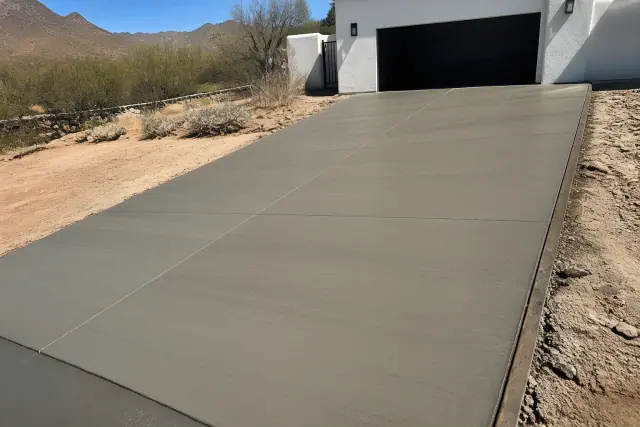
Newly installed concrete driveway with a textured finish and surrounding desert landscape in Drexel Heights, AZ.

New driveways and full replacements begin with grading and compacted base rock before a reinforced slab is poured. Depending on engineering requirements, reinforcement may use rebar or wire mesh, with broom or exposed-aggregate finishes and control joints placed to manage cracking during the cure.

Explore Service

Concrete Patio Installation

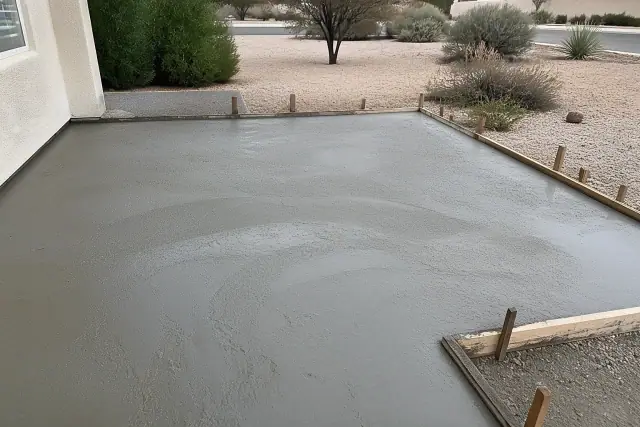
Freshly poured concrete patio inside wooden forms with desert landscape in the background in Drexel Heights, AZ.

Patio slabs are graded to move monsoon runoff away from the foundation instead of allowing water to pool near the home. Broom, exposed-aggregate, and stamped finishes provide practical options for outdoor living areas exposed to direct desert sun.

Explore Service

Stamped Concrete

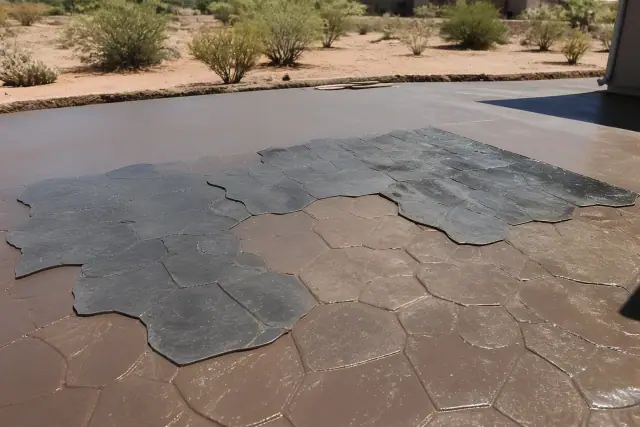
Textured mats pressing stone patterns into wet concrete at a job site in Drexel Heights, AZ.

Stamped driveways, patios, and entries can reproduce ashlar slate, cobblestone, wood-plank, flagstone, brick, or slate patterns. Integral color, color hardener, and acid-stain options are sealed after finishing to protect the decorative surface from constant sun exposure.

Explore Service

Concrete Sidewalks & Walkways

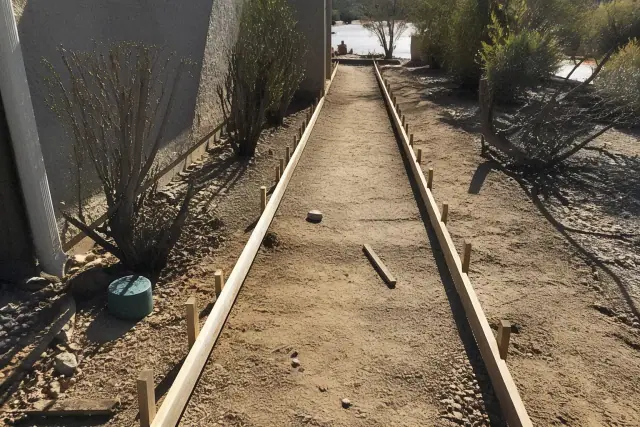
Wooden forms and stakes set up for a new concrete sidewalk project in Drexel Heights, AZ.

Concrete walkways connect driveways, entries, yards, and commercial pedestrian routes with durable flatwork. Where applicable, slopes are planned to meet ADA requirements while supporting safe drainage and a practical path through the property.

Concrete Slab Installation

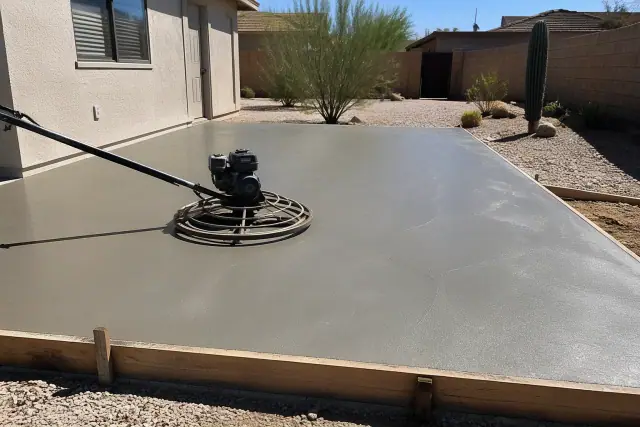
Worker using a power trowel to smooth a fresh concrete slab in a residential yard in Drexel Heights, AZ.

Slabs for sheds, workshops, and garage additions are designed around the structure's required load rating. Vapor barriers and reinforcement are specified according to the intended use rather than applied as a one-size-fits-all detail.

Concrete Foundations & Footings

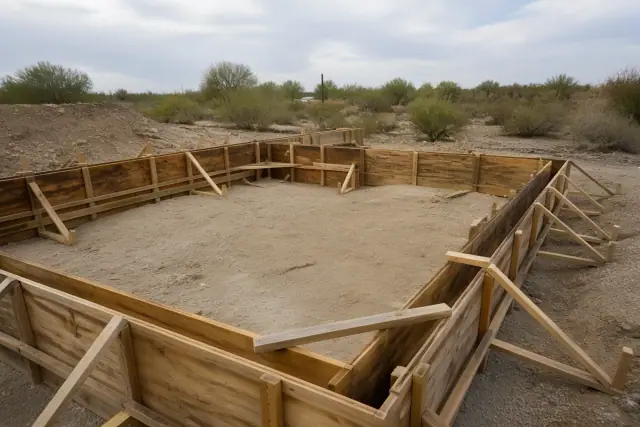
Wooden foundation forms for a concrete pour on a stony desert job site in Drexel Heights, AZ.

Footings are set to the depth required by local code and designed to bear on stable soil beneath problematic caliche. We coordinate with Pima County inspectors at required stages, including footing inspection and final foundation sign-off.

Concrete Repair & Resurfacing

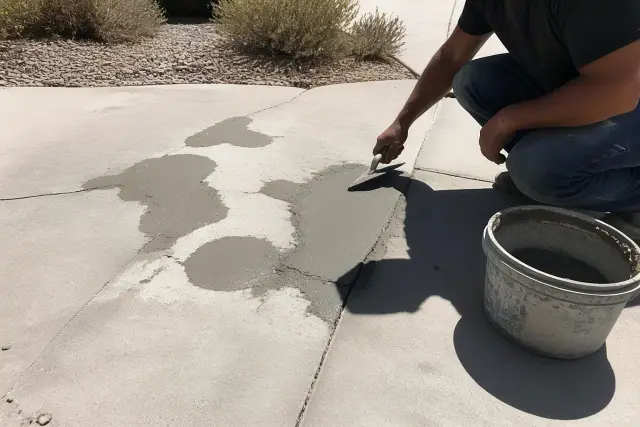
Worker using a metal trowel to patch a residential concrete driveway in Drexel Heights, AZ.

We assess whether cracking is limited to the surface or driven by movement beneath the slab. Patching, mudjacking, a bonded overlay, or full section replacement may be considered, and resurfacing can include a stamped or stained finish when the base structure remains sound.

Concrete Sealing & Maintenance

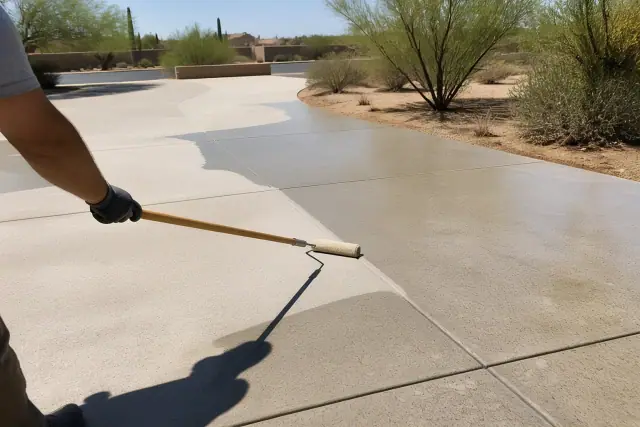
Contractor applying a clear protective sealer to a concrete surface in Drexel Heights, AZ under bright desert sun.

Concrete sealer helps limit UV breakdown, oil staining, and moisture intrusion from monsoon storms. Maintenance planning is tailored to driveways, patios, and decorative surfaces exposed to full Arizona sun.

Concrete Pool Decks

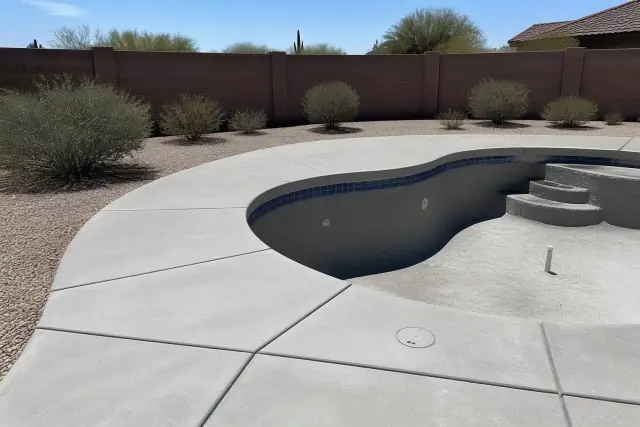
Concrete pool deck with expansion joints and desert landscaping in Drexel Heights, AZ.

Pool decks need slip resistance and a surface that is more comfortable for bare feet than standard flatwork. Cool-deck coatings, knockdown textures, and light-colored stamped finishes provide options for summer pool areas.

Concrete Demolition & Removal

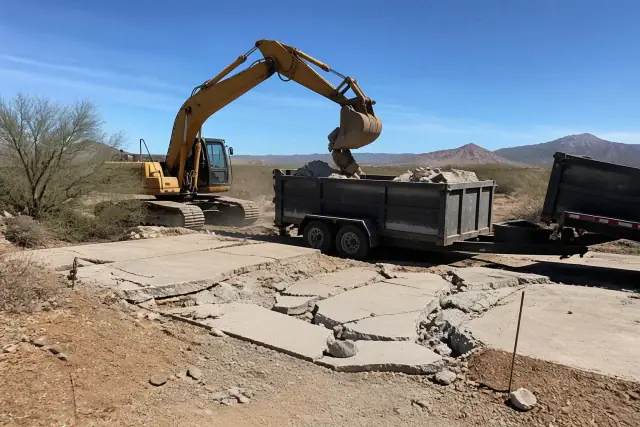
Heavy machinery breaking up old concrete and loading rubble into a container at a jobsite in Drexel Heights, AZ.

Old driveways, cracked patios, and failed slabs can be removed before a replacement pour. Our crews haul the debris off-site and handle disposal in line with Pima County requirements.

Project Planning

How to Choose the Right Concrete Approach in Drexel Heights

A durable concrete project starts by matching the design to the subgrade, water flow, expected load, finish, and condition of any existing slab. These decisions affect excavation, base depth, reinforcement, mix design, and whether repair or replacement is the more practical path.

Evaluate the Caliche Subgrade

Caliche does not compact or drain like ordinary soil, and expansive clay pockets can shift beneath a slab. We test the subgrade before pouring and adjust excavation, aggregate, and compaction where the hardpan sits close to the surface.

Match Slab Thickness to the Load

Passenger vehicles, RVs, commercial traffic, sheds, workshops, and loading pads place different demands on concrete. Slab thickness and reinforcement should reflect the actual use so the project is not under-built for the weight it will carry.

Choose Mix Strength for the Site

Driveway pours use a 3,500 to 4,000 PSI mix rated for the expansive clay conditions common across this part of Pima County. Mix strength, additives, reinforcement, and curing should work together rather than being selected as isolated upgrades.

Plan Drainage Before the Pour

Grading is established during excavation so patios, driveways, and walkways move water away from foundations and slab edges. This matters where hardpan limits drainage and seasonal monsoon runoff can collect against improperly sloped concrete.

Select Reinforcement and Finish

Rebar or wire mesh is selected according to engineering requirements and expected loads. Broom and exposed-aggregate finishes prioritize traction, while stamped textures and color treatments add a decorative surface for driveways, patios, and entries.

Compare Repair with Replacement

A sound base may make a bonded overlay or targeted repair practical, but structural movement beneath the slab can require mudjacking or section replacement. Reading the crack pattern before quoting prevents a cosmetic resurfacing from simply hiding a deeper problem.

Drexel Heights Concrete Issues

Common Concrete Problems for Desert Properties

Local concrete must withstand a difficult combination of hardpan, soil movement, intense sun, wide temperature swings, and concentrated stormwater. Identifying the cause of distress before choosing a repair or replacement helps avoid repeating the same failure.

Request Site Evaluation

Caliche and Expansive Soil

Shallow hardpan can keep water near a slab edge, while expansive clay pockets swell and contract beneath the concrete. Inadequate excavation or uneven compaction can leave sections without consistent support.

Monsoon Runoff and Pooling

A driveway or patio without the right slope can direct stormwater toward a foundation or hold it along the slab perimeter. Proper grading and drainage planning address water flow before the forms and concrete lock the elevation in place.

Extreme Surface Heat

High surface heat accelerates moisture loss and can increase shrinkage risk while fresh concrete cures. Early-morning scheduling during peak summer months, together with curing compounds or wet-cure methods, helps slow that moisture loss.

Shrinkage and Control-Joint Cracking

Concrete naturally changes as it cures, but poorly placed or delayed control joints leave cracking less predictable. Saw cuts made within hours of the pour create planned locations for movement as the slab hardens in Arizona heat.

UV, Oil, and Moisture Exposure

Constant sunlight can fade decorative color and wear an unprotected surface, while vehicle fluids and storm moisture can stain or penetrate concrete. The right sealer supports easier maintenance and helps protect exposed driveways and patios.

Structural Heaving and Failed Sections

Raised edges, uneven sections, or widening cracks can point to movement below the surface rather than a finish-only defect. Evaluating the supporting soil and the crack pattern helps distinguish a patchable area from a section that needs more substantial correction.

Why Choose Us

Why Choose Tucson Superior Concrete in Drexel Heights?

Our approach combines local soil and drainage knowledge with permit coordination, standards-guided placement, and a clear site evaluation before work begins. Homeowners and businesses get recommendations tied to their property, planned use, finish goals, and the actual condition of existing concrete.

Local Soil and Monsoon Knowledge

Our crews work across Drexel Heights and surrounding Pima County communities where caliche depth, lot drainage, and monsoon runoff vary from property to property. That familiarity informs base preparation, elevation, curing, and water-flow decisions.

Licensed and Standards-Guided Work

Tucson Superior Concrete is licensed through the Arizona Registrar of Contractors and carries insurance coverage for on-site work. Mix design and placement follow guidance from ACI and the Portland Cement Association, with required Pima County inspections coordinated for applicable projects.

Site-Specific Quote and Plan

A free concrete quote follows an on-site review of access, caliche depth, grading, removal needs, reinforcement, finish, and expected loads. That walkthrough keeps the estimate tied to the real scope rather than a generic square-foot assumption.

Concrete Workflow

Our Concrete Installation Process in Drexel Heights

The process moves from site evaluation and permitting through excavation, base preparation, reinforcement, placement, finishing, and curing. Each step is adjusted to the property's soil, drainage, access, finish, and intended load.

01.

Site Evaluation and Free Quote

We walk the property to review access, subgrade, drainage, existing concrete, finish goals, and the loads the new slab will carry. Those findings shape a free concrete quote tied to the actual scope.

02.

Permit Coordination

Where the project requires a permit, we coordinate with Pima County Development Services before construction begins. Foundation work also includes scheduling required inspection stages through final sign-off.

03.

Excavation and Grading

The site is excavated to grade, and failed asphalt or concrete is removed when replacement is part of the job. Elevations are set to direct runoff away from foundations and vulnerable slab edges.

04.

Base and Reinforcement

We install and compact a 4- to 6-inch aggregate base, adjusting preparation where caliche or expansive clay affects support. Rebar or wire mesh is then positioned according to engineering requirements and the slab's intended use.

05.

Pour, Finish, and Control Joints

Concrete is placed to the specified slab design and finished with the selected broom, exposed-aggregate, stamped, or coating system. Control joints are saw-cut to create planned locations for movement while the concrete cures.

06.

Curing and Follow-Up

Curing compounds or wet-cure methods help control moisture loss, especially during peak summer heat. We allow a 5- to 7-day curing period before vehicle traffic and remain available if an issue appears during that window.

Project Applications

Concrete Options for Homes & Businesses

Case Study 1: Driveways and parking areas: New installations, replacements, loading pads, and parking surfaces can be planned for passenger vehicles, RVs, or commercial load requirements, with finish and reinforcement matched to use.

Case Study 2: Outdoor living surfaces: Patios, pool decks, walkways, and entries can combine drainage-conscious grading with broom, exposed-aggregate, stamped, cool-deck, or knockdown finishes.

Case Study 3: Structural and repair work: Slabs, foundations, footings, crack repair, mudjacking, overlays, and failed-section replacement are evaluated according to load, soil movement, and the condition of the supporting base.

Request a Quote

Plan Your Drexel Heights
Concrete
Project

Tell Tucson Superior Concrete what you are planning, from a driveway replacement or patio to a slab, pool deck, repair, or demolition project. We will review the site, discuss finish and load needs, and prepare a free concrete quote before you commit.

Concrete Project Help

Concrete Driveway FAQs for Drexel Heights, AZ

These answers cover common questions about driveway costs, slab design, reinforcement, curing, sealing, decorative finishes, repairs, and other concrete work in Drexel Heights. A site visit is still the most reliable way to account for access, caliche depth, grading, and removal needs.

Call Our Concrete Team

A 200-square-foot driveway section, roughly a 10-by-20-foot pad, typically costs between $1,600 and $3,800 installed. Base preparation, reinforcement, finish, access, and removal of existing material influence the final price, while stamped texture or a decorative border can move the total toward the higher end.

Four inches is the standard minimum for a residential driveway carrying passenger vehicles when the base and reinforcement are properly prepared. Driveways used by heavier vehicles, RVs, or frequent commercial traffic may need 5 or 6 inches with additional rebar, depending on soil and load conditions.

Standard mix in Drexel Heights and the greater Tucson area typically runs between $92 and $102 per cubic yard, although strength, additives, and delivery distance can change material pricing. That figure covers concrete material rather than labor, forming, reinforcement, finishing, or demolition.

A 100-square-foot driveway section generally falls between $800 and $1,900 installed. This size is often a repair patch or extension, so labor and material minimums, access, base conditions, and the need to tie into existing concrete can affect the per-square-foot rate.

Wire mesh can help control cracking, but it must stay supported in the correct position during placement. Our crews often favor rebar for more consistent tensile strength over caliche or expansive soil, with spacing based on ACI guidance, slab thickness, soil conditions, and expected vehicle loads.

For a standard two-car driveway near 600 square feet, most homeowners in the service area pay between $3,900 and $7,300 installed. The finish, reinforcement, grading, base preparation, and demolition needs of the existing surface determine where a project falls within that range.

Stamped concrete typically runs $12 to $18 per square foot because texturing, color, and sealing add labor beyond plain flatwork. Pattern choice, color treatment, site preparation, and whether the work is new concrete or a suitable overlay also affect the quote.

Caliche does not compact or drain like looser soil, so water can remain near slab and foundation edges when grading is wrong. Its depth also varies by property, making subgrade testing, excavation, aggregate placement, and compaction important before concrete is poured.

We use a 5- to 7-day curing period before a new driveway sees vehicle traffic. Hot-weather scheduling and curing compounds or wet-cure methods help slow moisture loss while the slab gains strength.

We recommend resealing driveways and patios exposed to full Arizona sun every 2 to 3 years. Sealer helps protect against UV breakdown, oil staining, moisture intrusion, and fading on decorative surfaces.

A properly installed and maintained driveway or slab in this climate can last 25 to 30 years. A rushed pour without adequate curing control can begin showing cracks within the first two summers, which is why base preparation, control joints, and moisture management matter.

Tucson Superior Concrete installs patios, stamped surfaces, sidewalks and walkways, slabs, foundations and footings, and pool decks. We also provide concrete repair and resurfacing, sealing and maintenance, and demolition and removal for residential and commercial properties.

Permit and inspection requirements depend on the project. Tucson Superior Concrete coordinates required permits through Pima County Development Services, and foundation work may include inspections from the footing stage through final sign-off.

A bonded overlay may be practical when the underlying slab and base remain sound. If the crack pattern points to expansive-soil movement, heaving, or structural failure, patching or resurfacing alone may only delay the need for mudjacking or section replacement.

Cool-deck coatings, knockdown textures, and light-colored stamped finishes can provide slip resistance and a more comfortable surface for bare feet. The right option depends on the existing deck, design preference, sun exposure, and maintenance goals.