Proudly serving Tucson, Oro Valley, Marana, Sahuarita, Green Valley, Vail & surrounding areasCall or Text 24/7: 520-699-3263

Concrete Sealing and Long-Term Surface Maintenance in Tucson, AZ

Tucson Superior Concrete provides concrete sealing maintenance for homeowners and businesses in Tucson. We seal driveways, patios, stamped concrete, sidewalks, walkways, slabs, foundations, footings, and pool decks with systems selected for each surface. When concrete needs more than protection, our services also include driveway and patio installation, repair, resurfacing, and demolition and removal. We serve properties throughout Tucson and the greater Pima County area.

At roughly 2,400 feet in the Sonoran Desert, Tucson concrete faces surface temperatures that routinely climb past 140 degrees and UV exposure that runs among the highest in the country. Monsoon rain, abrasive dust, and winter temperature swings add moisture and cycling stress to unprotected slabs. We follow American Concrete Institute guidance for surface preparation and cure timing, then match acrylic, penetrating, polyurethane, or epoxy protection to the slab's exposure and finish. The result is a maintenance plan built around the property instead of a generic one-coat treatment.

Every free estimate starts with a walk-through of the driveway, patio, walkway, or pool deck before pricing. When a project requires permits, we coordinate through Pima County Development Services or the City of Tucson as applicable.

Tucson Superior Concrete provides concrete sealing maintenance throughout Tucson, Oro Valley, Marana, Sahuarita, and the greater Pima County area.

★ ★ ★ ★ ★4.9/5 Average Rating · 20+ Years of Experience · Thousands of Customers Helped · Licensed & Insured · Residential & Commercial

Concrete Sealing Options & Benefits

What Is Concrete Sealing Maintenance?

Concrete sealing maintenance protects a porous slab by limiting the entry of water, stains, and chemicals. Film-forming sealers create a surface barrier, while penetrating products soak into the concrete without changing its appearance.

In Tucson, maintenance begins with UV load, traffic, moisture, existing finish, and slip-resistance needs. Those conditions determine whether the surface needs acrylic, penetrating, polyurethane, epoxy, water-based, or solvent-based protection.

A complete program includes cleaning, treatment of cracks or discoloration, correct application, adequate cure time, and periodic resealing. This approach can protect driveways, patios, decorative surfaces, walkways, pool decks, foundations, footings, and slab-on-grade concrete.

Benefits of Concrete Sealing

The right sealer reduces the everyday damage caused by Tucson sun, sudden rain, vehicle fluids, pool chemicals, and abrasive desert grit. It also makes routine cleanup easier and helps preserve the color and texture of decorative concrete.

  • Limits water absorption during monsoon storms
  • Helps resist oil, rust, fertilizer, and food stains
  • Reduces UV fading and surface chalking
  • Protects stamped patterns and integral color
  • Makes tire marks and spills easier to clean
  • Reduces moisture that contributes to scaling and efflorescence
  • Supports slip-resistant finishes around pools
  • Extends maintenance intervals before major resurfacing
Concrete Sealing Services

Concrete Sealing Services

Different concrete surfaces face different combinations of traffic, chemicals, moisture, and sun. We tailor preparation, finish, and maintenance timing to the way each slab is built and used.

Concrete Driveway Sealing

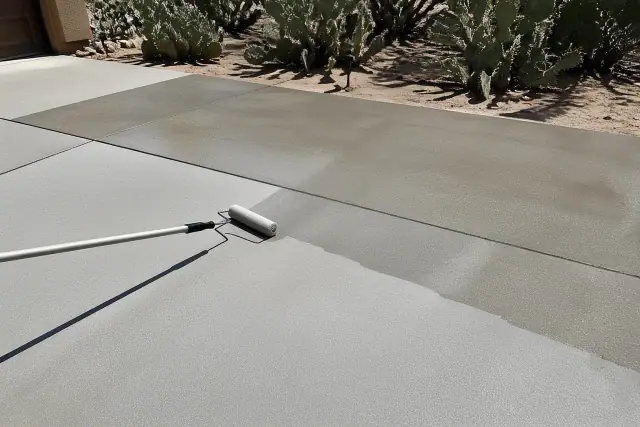
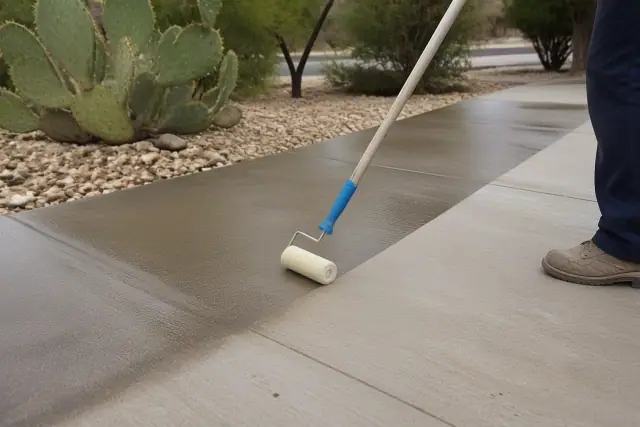
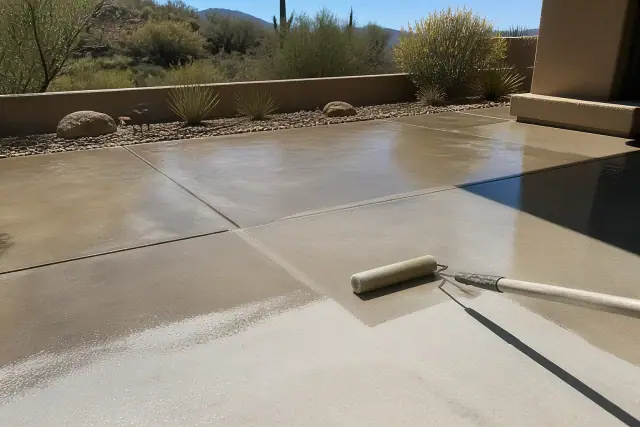
A roller brush applying a clear protective sealer to a concrete driveway in Tucson, AZ, with prickly pear cacti nearby.

Driveway sealing creates a barrier against oil, transmission fluid, antifreeze, tire marks, and full-day sun. A standard 650-square-foot driveway typically costs around $260 to seal, helping protect against staining and later resurfacing or replacement costs.

Request Estimate

Concrete Patio Sealing

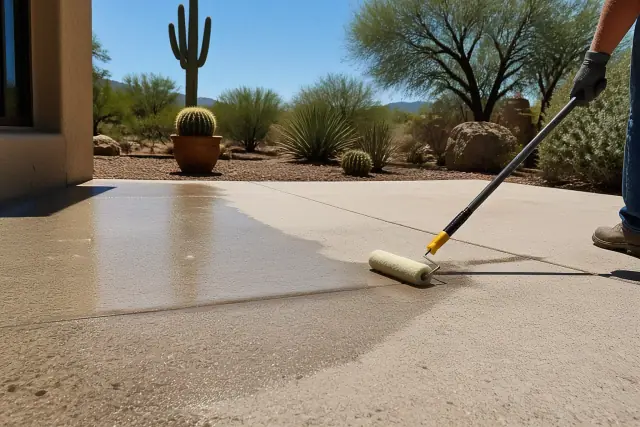
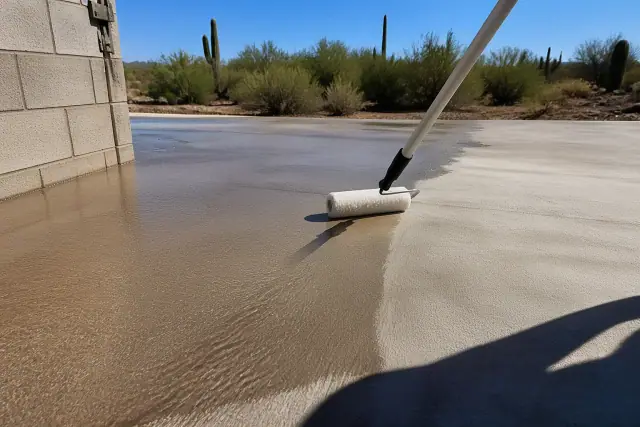
A roller brush applying a transparent protective sealer to a concrete patio in Tucson, AZ, with saguaro cacti nearby.

Patio sealing protects outdoor living surfaces exposed to bare feet, furniture, pool splash, and constant sun during Tucson's October-through-April entertaining season. Sealing a standard 10x20 patio typically costs between $250 and $600, depending on sealer type and surface condition.

Request Estimate

Stamped and Decorative Concrete Sealing

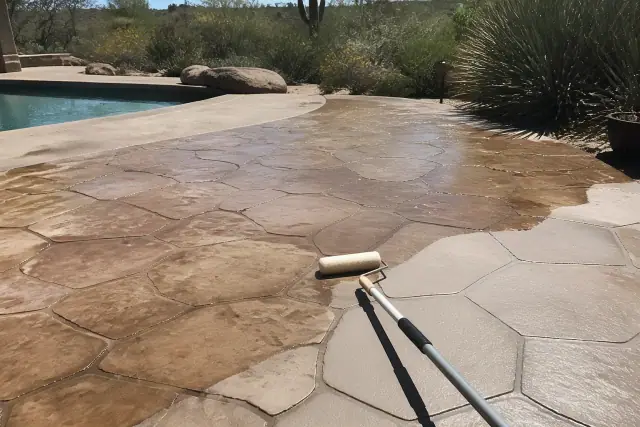
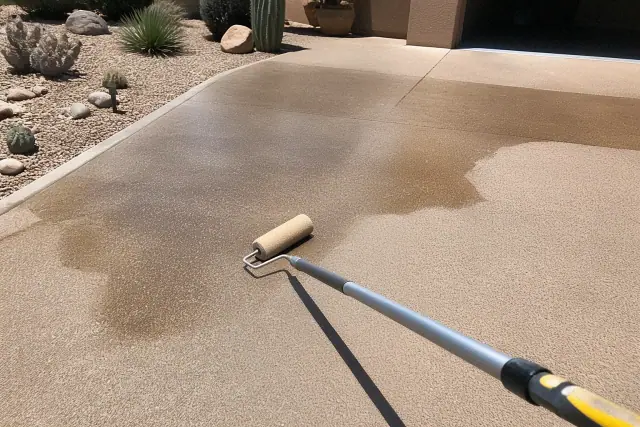
Contractor applying clear concrete sealer with a roller brush to a decorative surface in Tucson, AZ.

Stamped concrete depends on a thin colored and textured surface layer that can fade or wear under intense UV exposure. We use UV-resistant protection and select matte or high-gloss finishes according to appearance and slip-resistance needs.

Request Estimate

Concrete Pool Deck Sealing

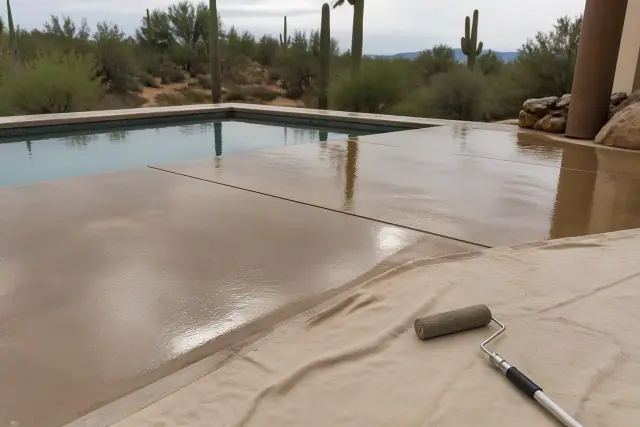
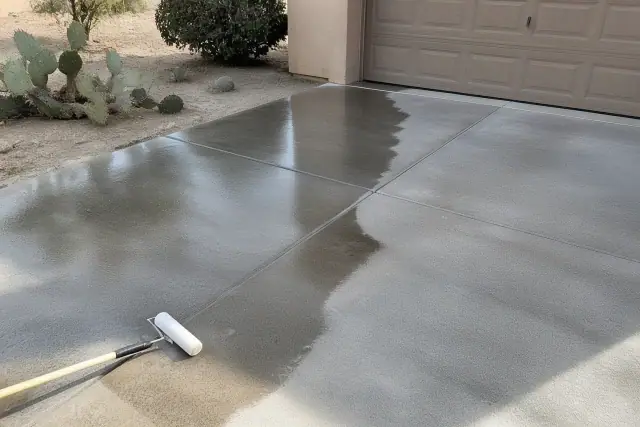
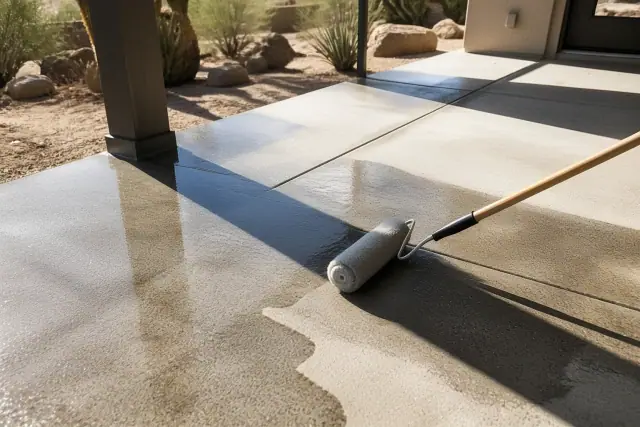
A contractor applies a glossy sealer to a concrete pool deck with a roller in Tucson, AZ, with saguaro cacti in the back.

Pool decks need protection from water intrusion, chlorine, suntan oil, and chemical exposure. Polyurethane or epoxy moisture barriers can be paired with a slip-resistant additive around coping and walkways.

Request Estimate

Walkway and Sidewalk Sealing

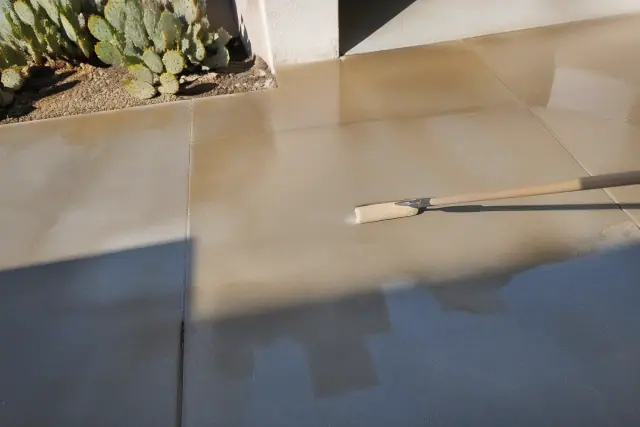
A roller applying sealer to a concrete walkway in Tucson, AZ, with a wet finish and desert landscape in the background.

Sealed walkways and sidewalks shed water, resist mineral discoloration, and clean more easily when desert dust accumulates. Breathable acrylic protection can add a light sheen without creating an unnatural high-gloss appearance.

Request Estimate

Commercial, Foundation, and Slab Sealing

A roller brush applying clear protective sealer to a concrete surface in Tucson, AZ with desert vegetation nearby.

Commercial and industrial concrete may need durable coatings for heavier vehicle and chemical exposure. Foundations, footings, and slab-on-grade surfaces often benefit from penetrating protection that handles ground moisture without changing the surface appearance.

Request Estimate
Sealer Systems

Types of Concrete Sealer Options

No single product fits every slab. We choose among acrylic, penetrating, polyurethane, epoxy, water-based, and solvent-based systems according to exposure, existing finish, traffic, moisture, and the appearance the property owner wants to maintain.

Acrylic concrete sealer being applied with a roller to a residential driveway in Tucson, AZ.

Acrylic Concrete Sealer

Acrylic sealer is our most common recommendation for driveways, walkways, and sidewalks. It forms a breathable surface film and can enhance color with a light sheen.

  • Suited to driveways, walkways, and sidewalks
  • Breathable film-forming protection
  • Light sheen that enhances concrete color
  • UV-resistant formulas available for direct sun
  • Typically reapplied on a two-year Tucson schedule
Request Estimate
A roller brush applies penetrating concrete sealer to a residential driveway in Tucson, AZ, near prickly pear cacti.

Penetrating Concrete Sealer

Penetrating sealer soaks into porous concrete instead of leaving a film on top. It is a practical fit for foundations, footings, and slabs exposed to ground moisture.

  • Protects within the concrete pore structure
  • Does not change the surface appearance
  • Useful for foundations, footings, and lower-traffic slabs
  • Avoids the peeling risk of a surface film
  • Can often follow a five-year sealing cycle
Request Estimate
Roller applying a clear polyurethane moisture barrier to concrete in a Tucson, AZ desert landscape.

Polyurethane Moisture Barrier

Polyurethane coatings provide a more durable moisture barrier for pool decks, concrete near irrigation lines, and surfaces with heavier exposure. Product and finish selection account for water, chemicals, and traction needs.

  • Resists water intrusion around pool and irrigation areas
  • Handles chlorine and common poolside chemical exposure
  • Supports heavier commercial service conditions
  • Can be paired with a slip-resistant additive
  • Matched to slab exposure and existing finish
Request Estimate
Epoxy coating being applied to a residential concrete surface in Tucson, AZ.

Epoxy Concrete Coating

Epoxy coatings offer durable surface protection for commercial properties and pool areas exposed to varied stains and chemicals. Preparation and surface condition are especially important before the coating is applied.

  • Designed for more demanding surface exposure
  • Helps resist oil and vehicle-related staining
  • Creates a moisture-resistant surface barrier
  • Suitable for selected commercial and pool deck uses
  • Accepts a slip-resistant additive where needed
Request Estimate
A roller brush applying a clear concrete sealer to a dry surface in Tucson, AZ under harsh midday sun.

Water-Based and Solvent-Based Sealers

Water-based and solvent-based products are both available within the sealer systems we use. The existing finish, desired appearance, exposure, and Tucson's UV load guide the choice.

  • Selected according to the slab's existing finish
  • Matched to exposure and surface use
  • Available across acrylic and coating applications
  • Some solvent-based products can yellow or amber in intense UV
  • UV-stable formulas are favored for direct Tucson sun
Request Estimate
Why Tucson Owners Choose Us

Concrete Sealing Built for Tucson

A successful sealing job depends on more than the product label. We evaluate desert exposure, prepare the slab carefully, and set a maintenance cycle for the way the property is actually used.

Climate-Matched Sealer Selection

We choose sealers for Tucson's intense UV, monsoon moisture, temperature swings, surface finish, and traffic instead of relying on generic manufacturer defaults.

Thorough Surface Preparation

Our crews follow American Concrete Institute guidance for surface preparation and cure timing, including cleaning, full dry time, crack work, and treatment of failed coatings or discoloration.

Property-Specific Maintenance Plan

We treat sealing as an ongoing system of preparation, product selection, application, and resealing. The schedule reflects sun, traffic, orientation, and the sealer installed on that property.

Problems We Address

Concrete Sealing Problems We Help Prevent

Unsealed or poorly prepared concrete can fade, absorb stains, draw in monsoon moisture, and lose its coating early. Identifying the cause before application helps us avoid sealing over an existing problem.

Request Surface Assessment

UV Fading and Chalking

Direct Arizona sun breaks down surface cement paste, leaving concrete faded, chalky, or sandy underfoot. Unsealed driveways in Rita Ranch and Dove Mountain often show visible UV degradation within two to three years.

Monsoon Moisture and Efflorescence

Monsoon season, roughly June through September, sends intense rain into concrete that has dried for months. Water moving through the pores can contribute to scaling and pull salts to the surface as white efflorescence.

Oil and Chemical Stains

Bare concrete quickly absorbs oil, transmission fluid, antifreeze, rust, fertilizer, food, and beverage spills. Sealing gives owners time to wipe up spills before they become permanent discoloration.

Temperature Cycling and Pitting

Concrete can move from freezing overnight winter conditions to afternoons above 140 degrees at the surface. Reducing water absorption helps limit the expansion, contraction, and surface pitting associated with those cycles, including winter frost in the Catalina Foothills and outlying areas.

Bubbling and Delamination

Trapped moisture beneath a fresh coat can cause bubbling, cloudiness, and delamination. Skipping complete cleaning and dry time is the most common reason DIY sealing jobs fail within the first year.

Wrong Sealer or Finish

A glossy acrylic can be slippery around a wet pool deck without a traction additive, and some solvent-based products can yellow in intense UV. The wrong system can also peel or require maintenance that does not fit the surface.

How It Works

Our Concrete Sealing Process

Sealer performance depends on the work beneath the final coat. Our process moves from surface review and cleaning through repairs, product selection, measured application, curing, and a property-specific resealing plan.

01.

Walk-Through and Exposure Review

During the free estimate, we review the slab's use, sun orientation, traffic, moisture exposure, existing finish, stains, and wear. That walk-through defines the preparation and sealer options we quote.

02.

Clean and Strip the Surface

We pressure wash away desert dust, caliche residue, oil residue, and failed prior coatings. The slab then dries completely so moisture is not trapped beneath the new sealer.

03.

Repair Cracks and Treat Discoloration

Cracks are routed and filled as part of the crack-sealing process. Efflorescence and mineral staining receive the required cleaning and neutralizing treatment rather than being sealed beneath a fresh coat.

04.

Match the Sealer to the Slab

We select acrylic, penetrating, polyurethane, epoxy, water-based, or solvent-based protection according to the surface, exposure, texture, and existing finish. Driveways, decorative patios, foundations, and pool decks do not receive a one-product-fits-all treatment.

05.

Apply at the Specified Coverage

Sealer is applied at the manufacturer's coverage rate, generally 200 square feet per gallon per coat for most acrylic products. We use sprayers or rollers according to the concrete texture.

06.

Second Coat, Cure, and Maintenance Plan

Two coats are standard for most residential and commercial sealing projects, with the required cure time between coats and before traffic returns. We then set the resealing interval around the installed product, traffic, sun, and moisture exposure.

Protect Your Concrete

Schedule a Concrete
Sealing
Estimate

Call Tucson Superior Concrete for a free walk-through and concrete sealing estimate. We will review your driveway, patio, stamped surface, walkway, slab, or pool deck before recommending a sealer and maintenance schedule.

Concrete Sealing Help

Concrete Sealing Maintenance FAQs

These answers cover timing, preparation, sealer choices, maintenance, and the warning signs Tucson property owners ask about most. A surface walk-through is still the best way to match the product and schedule to a specific slab.

Call About Sealing

Spring and fall are usually best, when daytime temperatures are between 50 and 90 degrees and the slab is not scorching. Peak summer heat can make sealer flash-cure too quickly, and we generally avoid scheduling immediately before monsoon rains begin in June because the surface needs a full dry cure window.

Sealing typically costs $0.40 to $0.90 per square foot, while resurfacing damaged concrete in Tucson averages $1,236 to $1,779. It also helps protect against oil stains, UV fading, monsoon moisture, and temperature cycling, so it is a practical preventive expense for exposed driveways.

Sweep or rinse abrasive grit away and clean the sealed surface with mild soap and water. Avoid harsh degreasers, citrus-based cleaners, de-icing salt, and close-range high-pressure washing, and wipe up oil, food, or chemical spills promptly.

Most acrylic-sealed concrete in Tucson needs resealing about every two years, while penetrating sealers on foundations or lower-traffic slabs can often last on a five-year cycle. Exposure matters: a west-facing pool deck in full afternoon sun for eight months of the year will wear faster than a shaded north-facing walkway.

Yes. Dust, caliche residue, efflorescence, oil, and failed coatings interfere with adhesion, so the surface must be pressure washed, treated as needed, and allowed to dry completely before application. Sealing over dirt or moisture can cause cloudiness, bubbles, and early coating failure.

Most downsides come from incorrect selection or application. Glossy acrylic can be slippery when wet without a slip-resistant additive, some solvent-based products can yellow under intense UV, and every system requires eventual maintenance rather than serving as a permanent one-time treatment.

Look for dulling, water that no longer beads, or bare patches in high-traffic areas such as garage entries and pool deck edges. Addressing those wear spots before the concrete is exposed helps prevent stains and moisture from entering the slab.

Price depends on surface size and condition, the sealer system, cleaning needs, failed-coating removal, crack work, and the number of coats required. A walk-through lets us account for those conditions before providing the free estimate.

Acrylic is commonly used on driveways, sidewalks, and walkways, while penetrating sealer fits foundations, footings, and porous slabs exposed to ground moisture. Polyurethane or epoxy barriers may be better for selected pool deck and commercial conditions, especially where water, chlorine, chemicals, or heavier traffic are present.

Two coats are standard for most residential and commercial sealing projects. Most acrylic products are applied at roughly 200 square feet per gallon per coat, with the required cure time between coats and before the surface returns to traffic.

Efflorescence and existing mineral discoloration should be cleaned and neutralized before new sealer is applied. Covering them without treatment can trap the visible problem beneath the coating instead of correcting the surface condition.

Yes. A UV-resistant sealer helps protect the thin colored and textured surface layer from fading and chalking in direct Tucson sun. The finish can be selected in matte or high-gloss form while accounting for traction around seating, dining, or pool areas.

Trapped moisture, inadequate cleaning, and improper cure conditions can all produce bubbles, cloudiness, or delamination. The slab should be fully dry, and each coat should be applied within the product's specified coverage and cure requirements.